The Finnish RSE meetup 2026
Samantha WittkeMarch 16, 2026
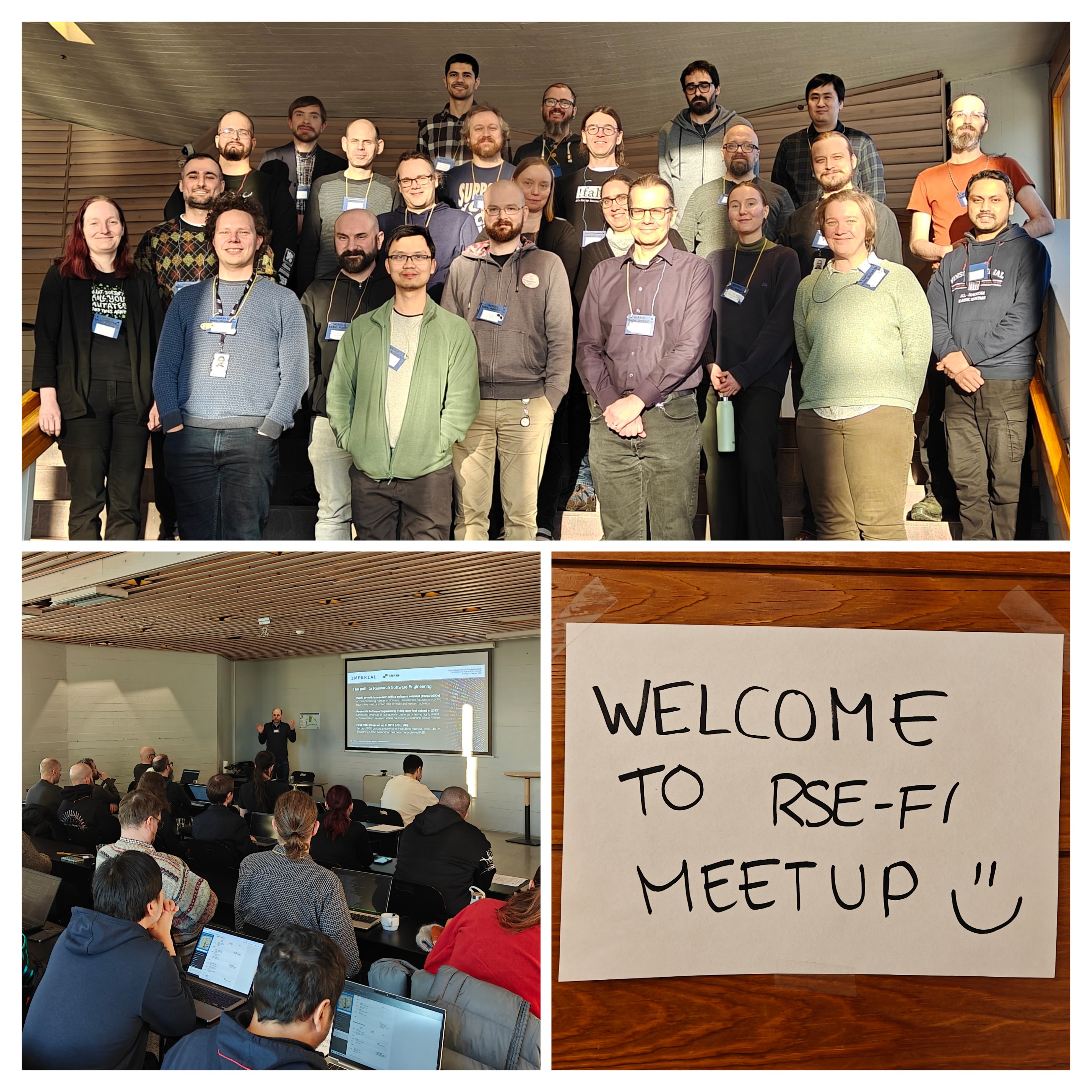
The Finnish RSE community held its second national meetup at the Nordic Basic Scientific Computing Days, this time side‑by‑side with the Scientific Computing team gathering, creating a combined space where research software and scientific computing communities could meet. With 30 participants from 7 organizations, the room quickly filled with the kind of energy that only happens when people who “get each other’s work” finally meet face to face.
The program combined structure and spontaneity: one inspiring keynote, four contributed talks highlighting the different kind of RSE work across Finland, as well as a discussion and a laptop session. But as always, the most important part of the day wasn’t on the formal agenda, it was the networking, the hallway chats, the new connections, and the sense of community taking shape.
The program included a mix of keynotes, technical talks, and open discussion that revealed just how diverse and community‑minded Finnish RSE work already is:
Kamyar Hasanzadeh explored the many ways GIS tools can be shared, e.g. scripts, notebooks, plugins, web apps, and why each comes with trade-offs. The core message: sharing isn’t just a technical choice but an audience question. Different user groups require different solutions, and no single format works for everyone. Sustainable sharing means balancing reproducibility, usability, and maintenance while being clear about who the tool is really for.
Ina Pöhner and Rafael Lopes Almeida shared the story of TargetCAT, a small workflow script that grew into an essential tool for data‑driven drug design. Their talk highlighted the hidden labor of researcher‑developers: fragile manual workflows, invisible coding work done outside official hours, and tools that expand faster than they can be maintained. The reboot of TargetCAT—supported by industry collaboration and CodeRefinery—showed how proper RSE practices can turn a “Frankenstein” script into sustainable software.
Jeremy Cohen from the Imperial College London opened the day with a keynote full of practical lessons from the UK RSE movement: how grassroots communities can grow, how volunteer energy can be nurtured, and why visibility, mailing lists, and lightweight opportunities to contribute matter so much. He also connected the local discussion to global efforts such as the Society of Research Software Engineering, the Research Software Alliance, and initiatives like DORA and the Hidden REF that push for research software to be recognized as scholarship.
Julia Niskanen introduced a toolchain for making proprietary Origin .opju files FAIR‑er, using Python to extract data into open formats—highlighting both the pains of closed ecosystems and the motivation to publish tools that help others avoid the same problems.
Frankie Robertson’s talk on SymPy and computer algebra systems introduced symbolic workflows and the joy (and occasional chaos) of mixing scientific Python with more traditional CAS tools.
Discussions throughout the day circled back to a few recurring themes:
- Community spaces matter, whether that’s our Nordic-RSE Zulip chat or regional meetups, it helps by meeting people to have someone to ask/discuss; especially when you're the only RSE in your department.
- RSE visibility needs to increase, especially toward funders, universities, and policy makers. People called for clearer career paths, KPIs that reflect real contributions, and national‑level coordination.
- Training and shared knowledge are key; everything from LLM-assisted coding to infrastructure best practices to guidance for newcomers on unions and support networks.
Based on these discussions, we will continue to consider how the existing Nordic-RSE association or maybe also a new Nordic or Finnish RSE organization may help people feel less alone, more supported, and more connected.
We are deeply grateful for the support we have received for this event: This meetup wouldn’t have been possible without the support of Aalto Scientific Computing, the Software Sustainability Institute, the Society of Research Software Engineering, and a handful of dedicated individuals who care about building a strong RSE network in Finland. Everyones contributions helped create a welcoming space where RSEs could share, learn, and feel seen.
Thank you!